What You'll Learn
- How an LLM turns raw token scores into probabilities before choosing what comes next
- How temperature reshapes a probability distribution to make outputs more predictable or more varied
- How top-p sampling limits which tokens the model is allowed to consider
- Why top-p adapts to model confidence differently from a fixed top-k cutoff
- How temperature and top-p interact when both are applied to the same distribution
- How to choose sampling settings for factual, structured, professional, and creative tasks
What You'll Learn
- Why collisions happen long before an ID space is full
- Why collision risk grows much faster than intuition suggests
- How the birthday paradox applies to computer systems
- How to calculate the probability of an ID collision
- Why the square root of the ID space determines the danger zone
- How 32-bit, 64-bit, and UUID v4 IDs compare
- How generation rate changes the time until collisions become likely
- How to choose an acceptable collision risk for a real system
- How Monte Carlo simulation can validate collision calculations
- How to predict when an ID strategy needs to be replaced
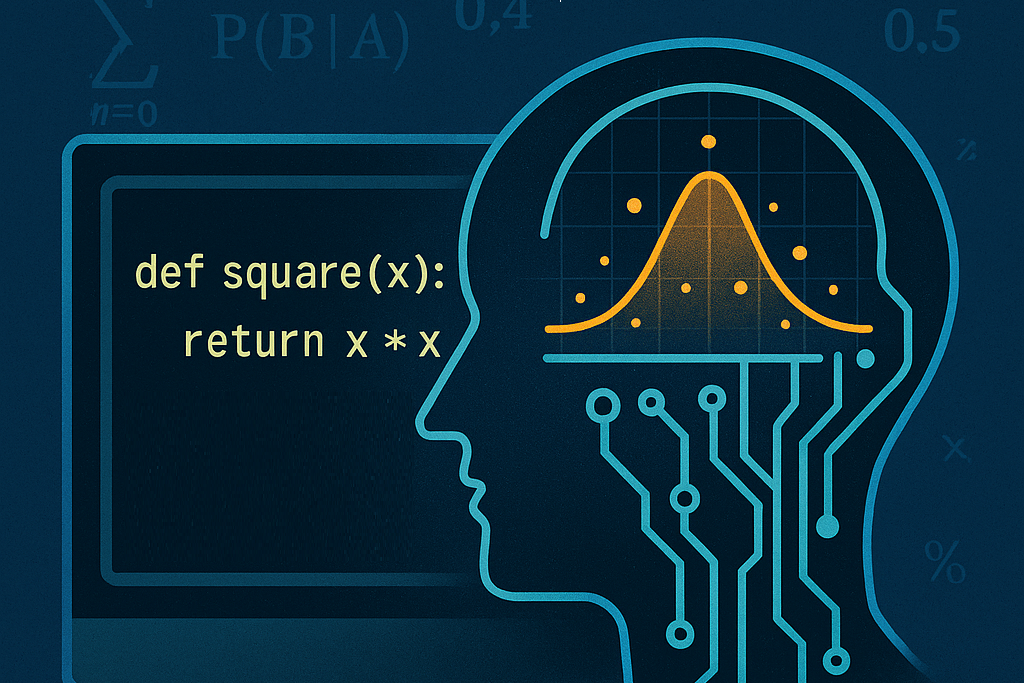
What You'll Learn
- How an LLM reads code differently from a compiler or a human developer
- Why models recognize programming patterns instead of executing the code they see
- How embeddings let an LLM associate code with similar structures and meanings
- Why comments, variable names, and familiar coding idioms can change a model’s interpretation
- How statistically likely code can still be logically or operationally wrong
- Why combining generative AI with compilers and static analysis produces safer coding tools
![]()