What You'll Learn
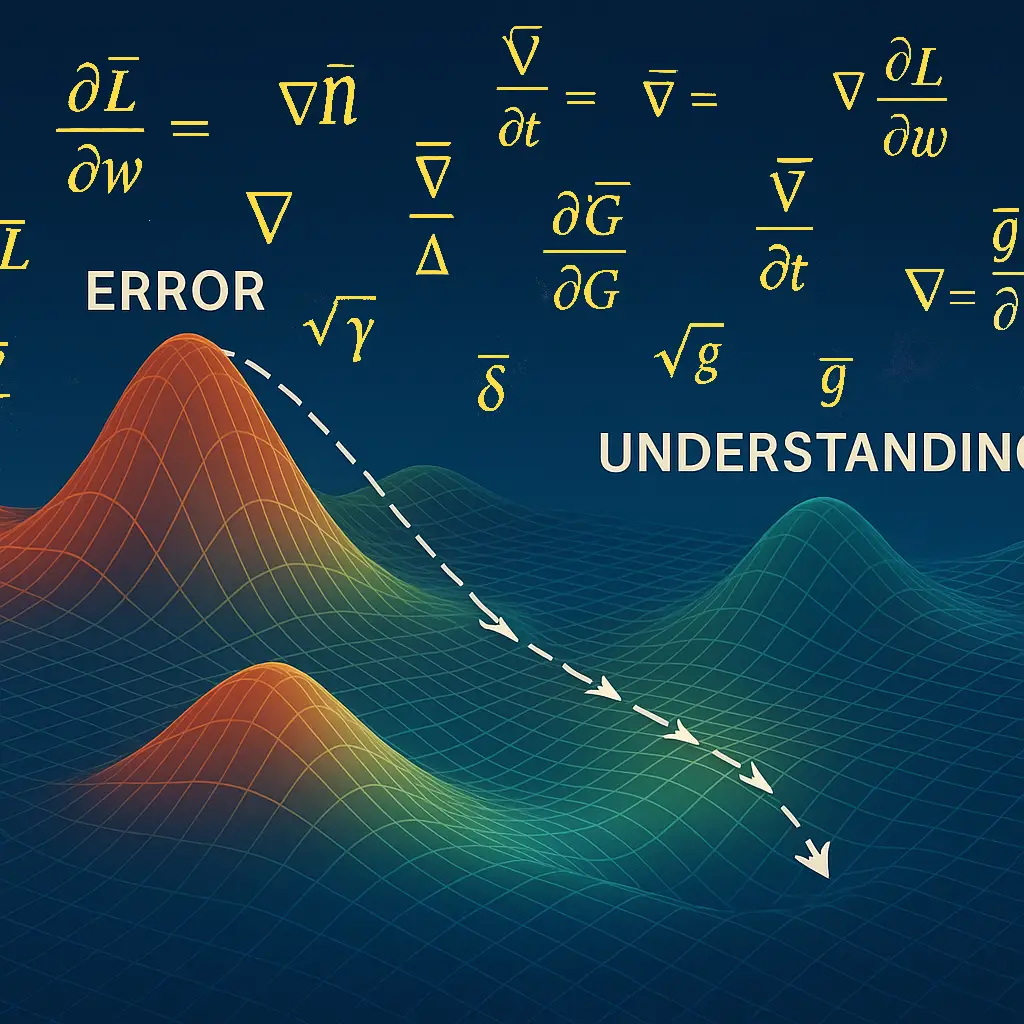
- How derivatives tell a model which direction will reduce its prediction error
- How gradient descent turns billions of small corrections into learning
- How backpropagation uses the chain rule to assign error across many layers
- Why the learning rate controls the balance between fast progress and stable training
- Why noisy mini-batch updates can help a model generalize instead of memorize
- How transformers keep gradients stable while learning which patterns deserve attention
What You'll Learn
- How to turn meeting choices into a mathematical optimization problem
- How time and mental energy can be modeled as separate constraints
- How a 0/1 knapsack model chooses the most valuable combination of meetings
- How Python and PuLP can solve a meeting schedule automatically
- How AI can scaffold optimization code when you give it the right mathematical structure
- How simulation and visualization can reveal which meetings are worth attending
What You'll Learn
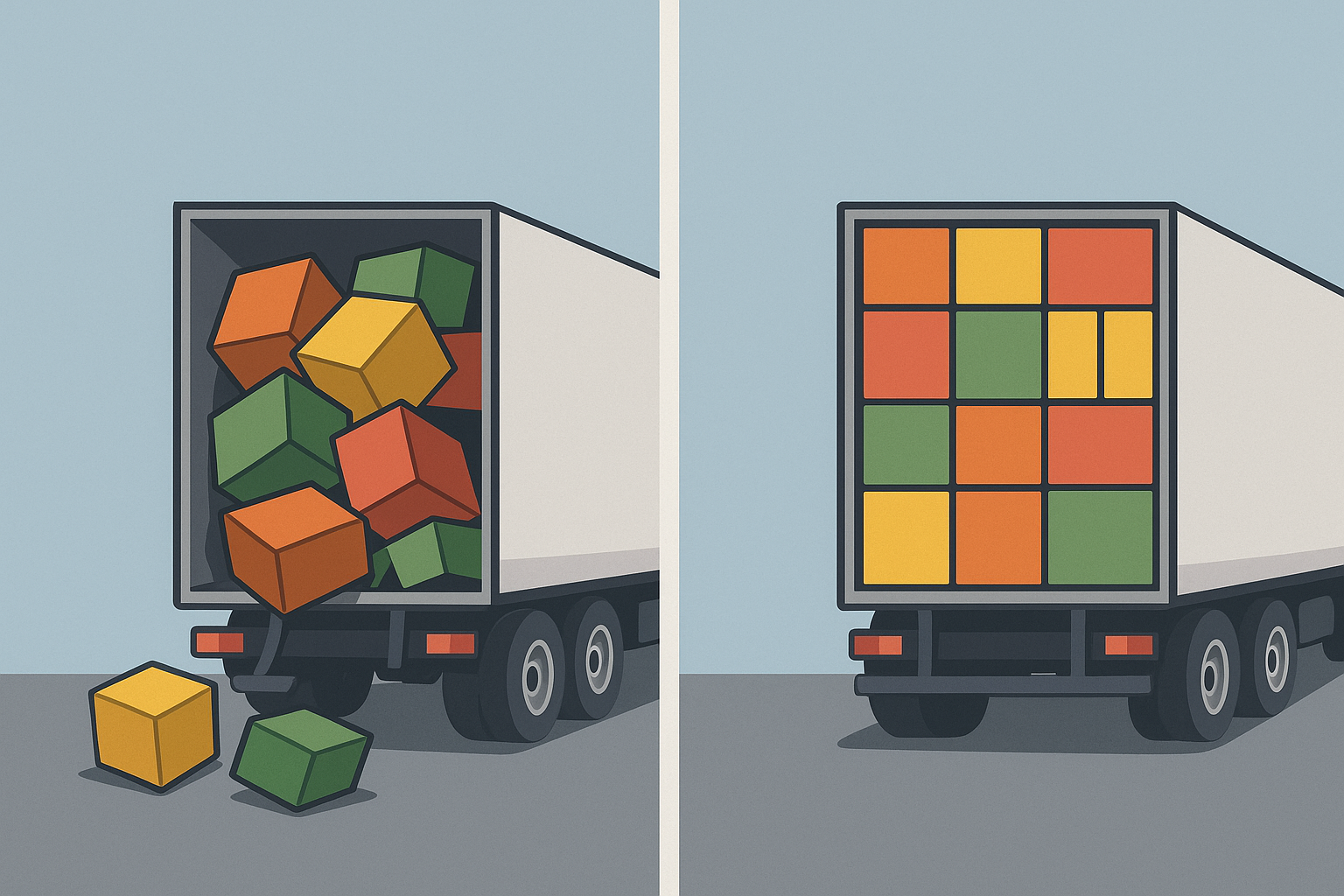
- Why loading a truck efficiently is a difficult 3D optimization problem
- Why NP-hard problems usually require practical heuristics instead of perfect solutions
- How box dimensions, orientation, weight, and truck boundaries become constraints in a packing model
- How a greedy Python algorithm can build a workable packing plan
- How 3D visualization helps reveal overlaps, wasted space, and placement mistakes
- How more advanced techniques can improve packing efficiency when simple heuristics are not enough
![]()