3 "Optimization" Posts

How Large Language Models (LLMs) Learn: Calculus and the Search for Understanding

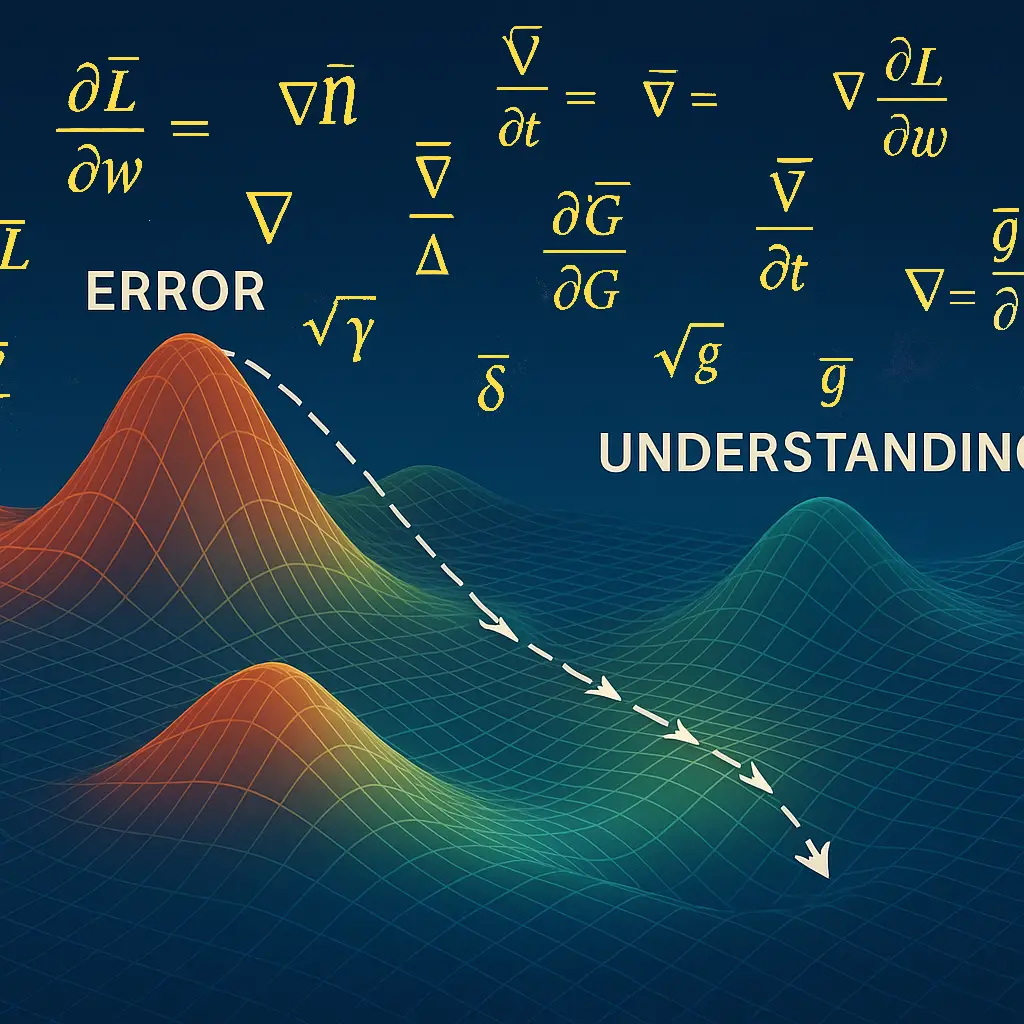
When you interact with a large language model (LLM) such as ChatGPT or Claude , the model seems to respond instantly relative to the question’s degree of difficulty. What’s easy to forget is that every word it predicts comes from a long history of learning where billions of gradient steps have slowly sculpted its understanding of language.

Large language models don’t memorize text. They optimize it. Behind that optimization lies calculus. I’m not referring to the calculus you did with pencil and paper. I’m talking about a sprawling, automated version that computes millions of derivatives per second.

At its heart, every LLM is a feedback system. It starts with random guesses, measures how wrong it was, and then adjusts itself to be slightly less wrong. The word “slightly” in this context is the essence of calculus.


“Each gradient step represents a measurable reduction in error, guiding the model toward a more stable understanding of language.”

Read more →

The Meeting Diet: An Optimization Approach to Your Calendar

Every week your calendar fills with more meeting invites than you can reasonably handle. Which ones are worth the time and energy, and which should you politely decline? What if there was a way to quantify that choice?


“Your calendar is a knapsack. Every meeting takes space, but only some add enough value to justify carrying them.”


The good news: math can help. By modeling your schedule as a 0/1 knapsack problem with two constraints , you can treat meetings like items with value, time cost, and energy cost. Classic optimization techniques then help decide which meetings to attend. In this post, we’ll walk through framing the problem, prompting AI to scaffold the code, and running a simulation to visualize your optimal “meeting diet.”

Read more →

From Ice Shows to Algorithms: Cracking the Truck-Packing Problem

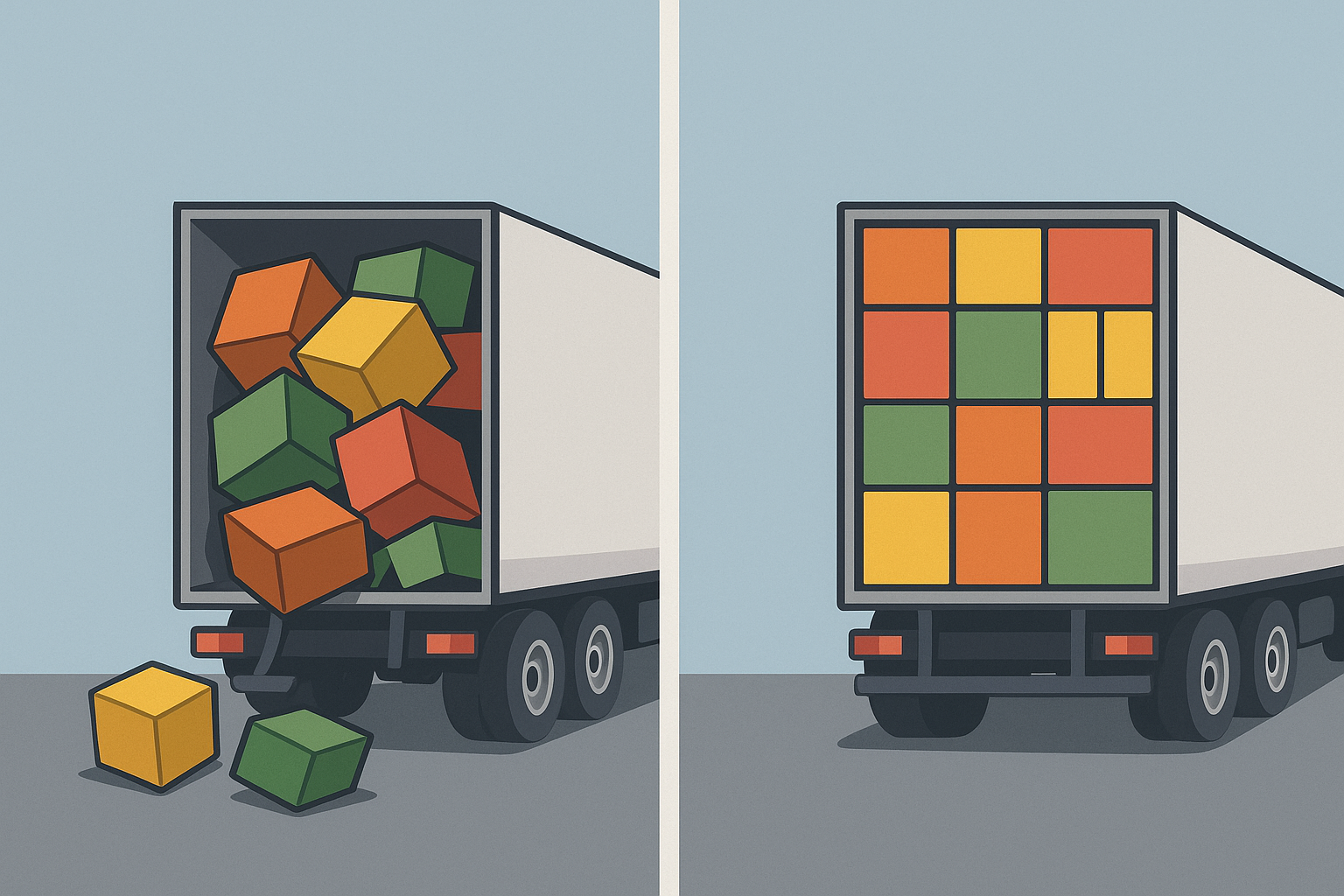
My first full-time programming job was for Holiday on Ice, an international ice show. While I focused mainly on back office systems such as accounting, itinerary, and box office reporting, I knew that one of the biggest technical challenges faced by the show’s crew was efficiently loading trucks for the next city.

“Given the dimensions of a truck and a list of containers (with their dimensions and weight), in what order, position, and orientation should you pack the truck?”


One day, the controller asked me if I could code a system that took, as input, the trucks’ 3D dimensions and the 3D dimensions (and weight) of every object to be packed. Back in the Turbo Pascal era, exploring 3D packing was painful. Today, with Python and AI-assisted scaffolding, it’s surprisingly approachable.

Read more →