2 "Embeddings" Posts

The Discrete Mathematics Hiding Inside LLMs

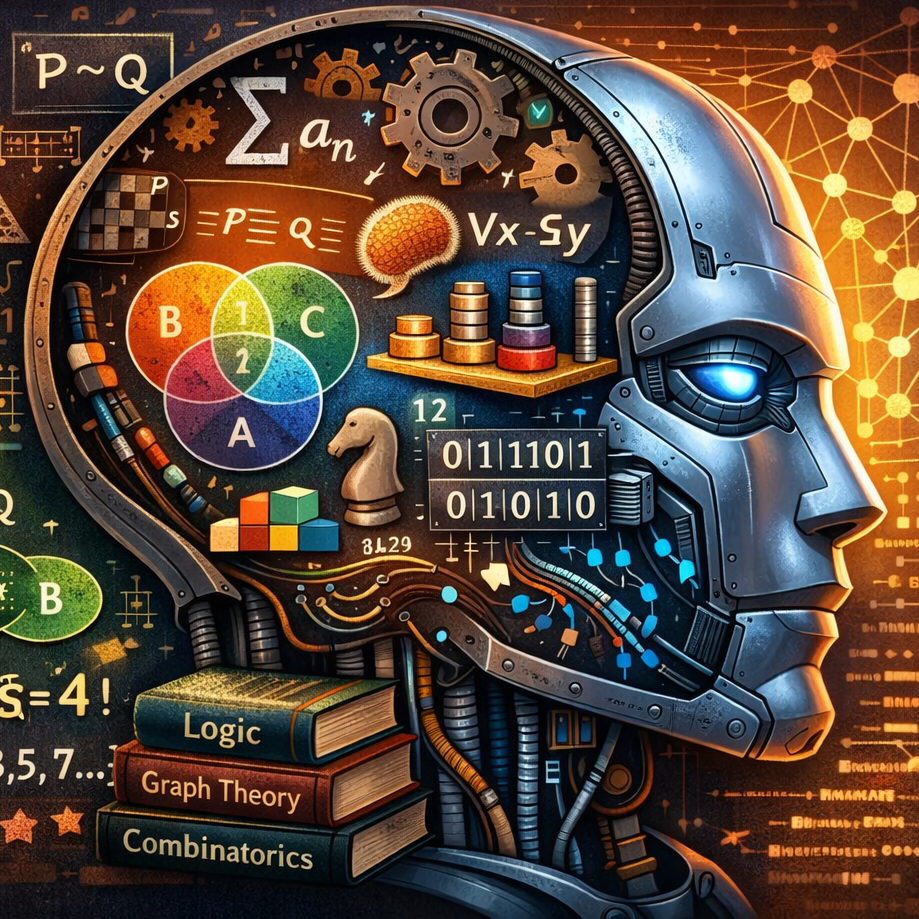
A recent LinkedIn post from Michael Palmer described how discrete mathematics is the foundation for how computers reason about problems. That thread got me thinking about just how many discrete math concepts show up inside systems that seem purely statistical. LLMs are often described in terms of neural networks, gradient descent, and probability distributions. If you’ve taken discrete mathematics and wondered what it has to do with modern AI, the answer is: more than you’d expect.

Underneath the calculus and linear algebra, the same structures you learn in a discrete math course keep appearing: sets, predicate logic, Boolean operations, modular arithmetic, formal proof patterns. This post traces those connections.


“Attention heads act like soft predicates over tokens. Masks are set operations. Chain-of-thought resembles proof structure.”


Read more →

How Large Language Models (LLMs) Think: Turning Meaning into Math

When you enter a sentence into a Large Language Model (LLM) such as ChatGPT or Claude , the model does not process words as language. It represents them as numbers.

Each word, phrase, and code token becomes a vector — a list of real-valued coordinates within a high-dimensional space. Relationships between meanings are captured not by grammar or logic but by geometry. The closer two vectors lie, the more similar their semantic roles appear to the model.

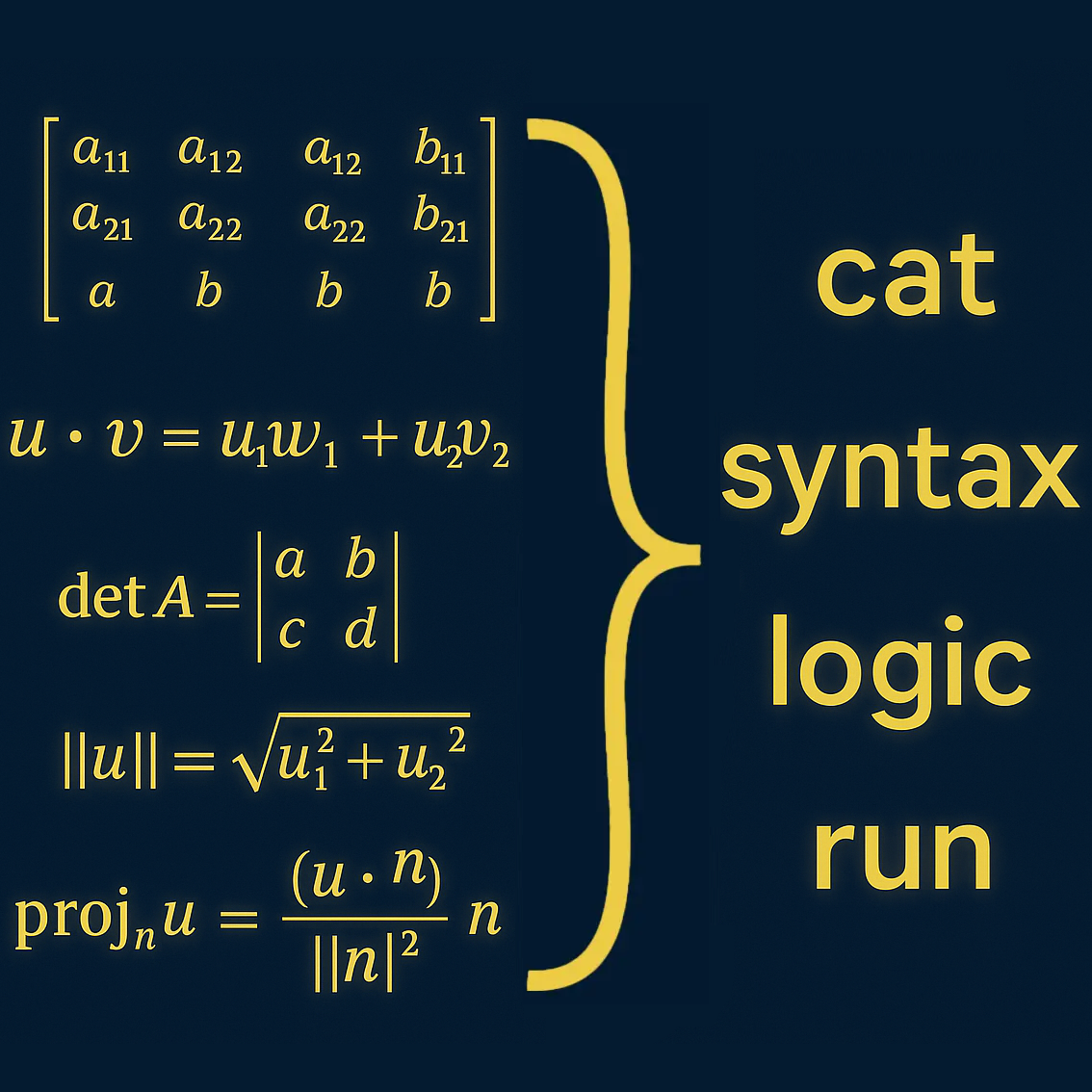
This is the mathematical foundation of large language models: linear algebra. Matrix multiplication, vector projection, cosine similarity, and normalization define how the model navigates this vast space of meaning. What feels like understanding is actually the alignment of high-dimensional vectors governed by probability and geometry.


“Linear algebra and geometry do more than support AI; they create its language of meaning.”


Read more →