What You'll Learn
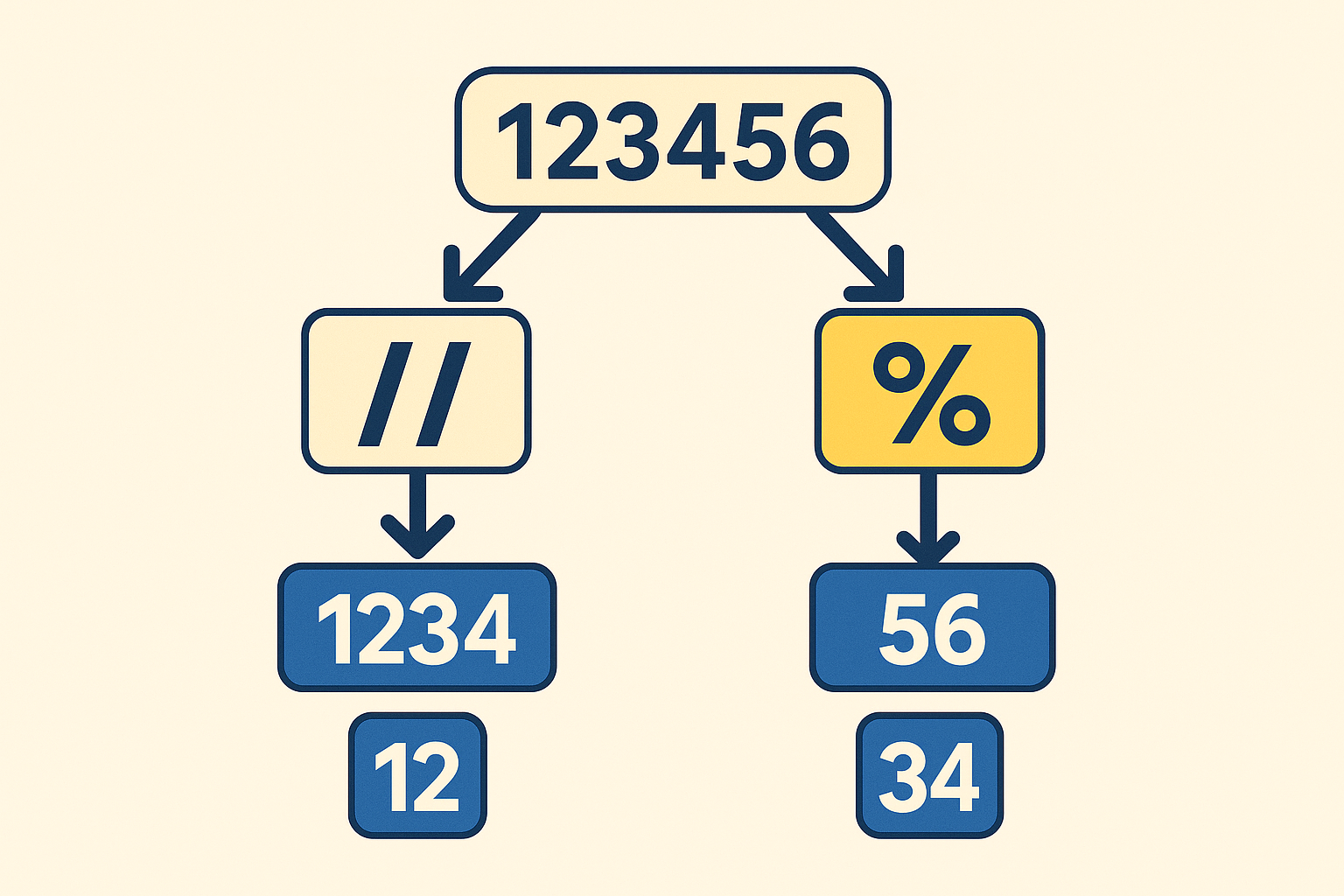
When numeric parsing is a better choice than converting numbers to strings How integer division removes digits from the right side of a number How modulus extracts the rightmost digits from a number How to split fixed-width numeric codes into meaningful fields How // and % naturally break timestamps into hours, minutes, seconds, and milliseconds How to process individual digits numerically for algorithms such as checksums What You'll Learn
Why floating-point numbers cannot represent many ordinary decimal values exactly How SymPy keeps rational values exact instead of introducing floating-point approximations When tolerance checks such as math.isclose are appropriate and when exact math matters How symbolic computation can calculate derivatives and solve equations without numerical approximation When SymPy is a better choice than NumPy for a mathematical problem How SymPy and NumPy complement each other as tools for precision and performance What You'll Learn
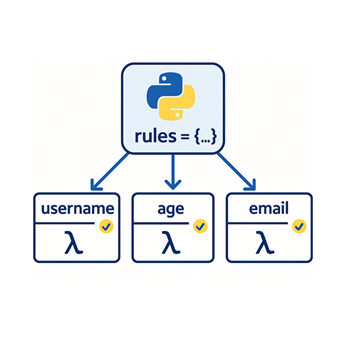
Why deeply nested validation logic becomes difficult to read and maintain How guard clauses improve control flow but can still create repetitive validation code What a dispatch table is and how Python dictionaries make the pattern easy to implement How lambda functions can pair validation rules with their corresponding error messages How a single loop can evaluate many validation rules without adding more control flow Why dispatch tables make validation code easier to extend, read, and maintain
×