8 "Applied Modeling and Simulation" Posts

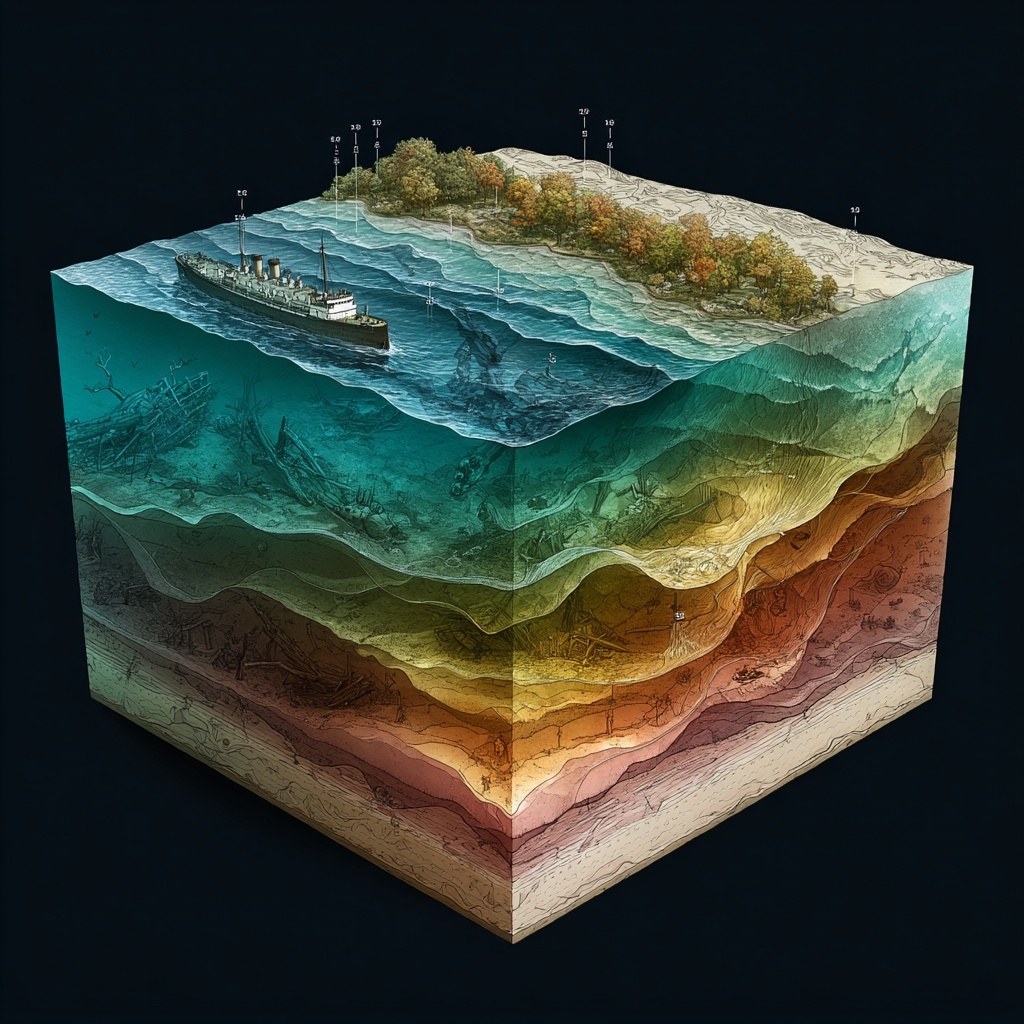
The Wreck of the Edmund Fitzgerald: Modeling Decomposition in Extreme Environments

Originally appearing on his 1976 album, Summertime Dream, “The Wreck of the Edmund Fitzgerald” is a powerful ballad written and performed by folk singer Gordon Lightfoot . In 1976, the song hit No. 1 in Canada on the RPM chart, and No. 2 in the United States on the Billboard Hot 100. The lyrics are a masterpiece, but there was one specific line that always stood out to me: “The lake, it is said, never gives up her dead.” Following the singer’s death in 2023, the song reconnected with older fans and reached new generations of listeners, making it to No. 15 on Billboard’s Hot Rock and Alternative category.

Listening to it again after all these years, I was inspired to research what that line meant and if there was any truth to it. What I discovered was very illuminating: Lake Superior really doesn’t give up her dead, and the science behind it is as haunting as the song itself.

It turns out that line is not poetic license. It’s physics.

When 29 souls went down with the Edmund Fitzgerald on November 10, 1975, they stayed down. Not because of some mystical property of the Great Lakes, but because of a perfect storm of temperature, pressure, and biology that we can model mathematically.


Note: This post contains scientific discussion of decomposition and forensic pathology in the context of maritime disasters.


“The lake, it is said, never gives up her dead / When the skies of November turn gloomy”


Read more →

The Birthday Paradox in Production: When Random IDs Collide

You generate a UUID. It’s 128 bits total, with 122 bits of randomness. That’s 340 undecillion possible values. Collision-proof, right? Your system generates a million IDs per second. Still safe? What about a billion?

As I like to say, common sense and intuition are the enemies of science. Common sense tells you that with 340,000,000,000,000,000,000,000,000,000,000,000,000 possible values, you’d need to generate at least trillions before worrying about duplicates. Maybe fill 1% of the space? 10%?

Math shows us the uncomfortable truth: You’ll hit a 50% collision probability after generating just \(2.7 \times 10^{18}\) IDs. That’s 0.0000000000000000008% of your total space. At a billion IDs per second, you’ve got 86 years. Comfortable, but not infinite. Drop to 64-bit IDs? Now you’ve got 1.4 hours. Just enough time to duck out for long lunch and return to a disaster. And 32-bit? 77 microseconds. Faster than you can blink.

You might know that the birthday paradox proves that just 23 people have more than a 50% probability of sharing a birthday. What you may not know is that this isn’t just a party trick; it’s the same mathematics that determines when your “guaranteed unique” database IDs collide, why hash tables need careful sizing, and when your distributed system’s assumptions break.


“In a room of 23 people, there’s a greater than 50% chance two share a birthday. In your database, collisions arrive far sooner than intuition suggests.”


Read more →

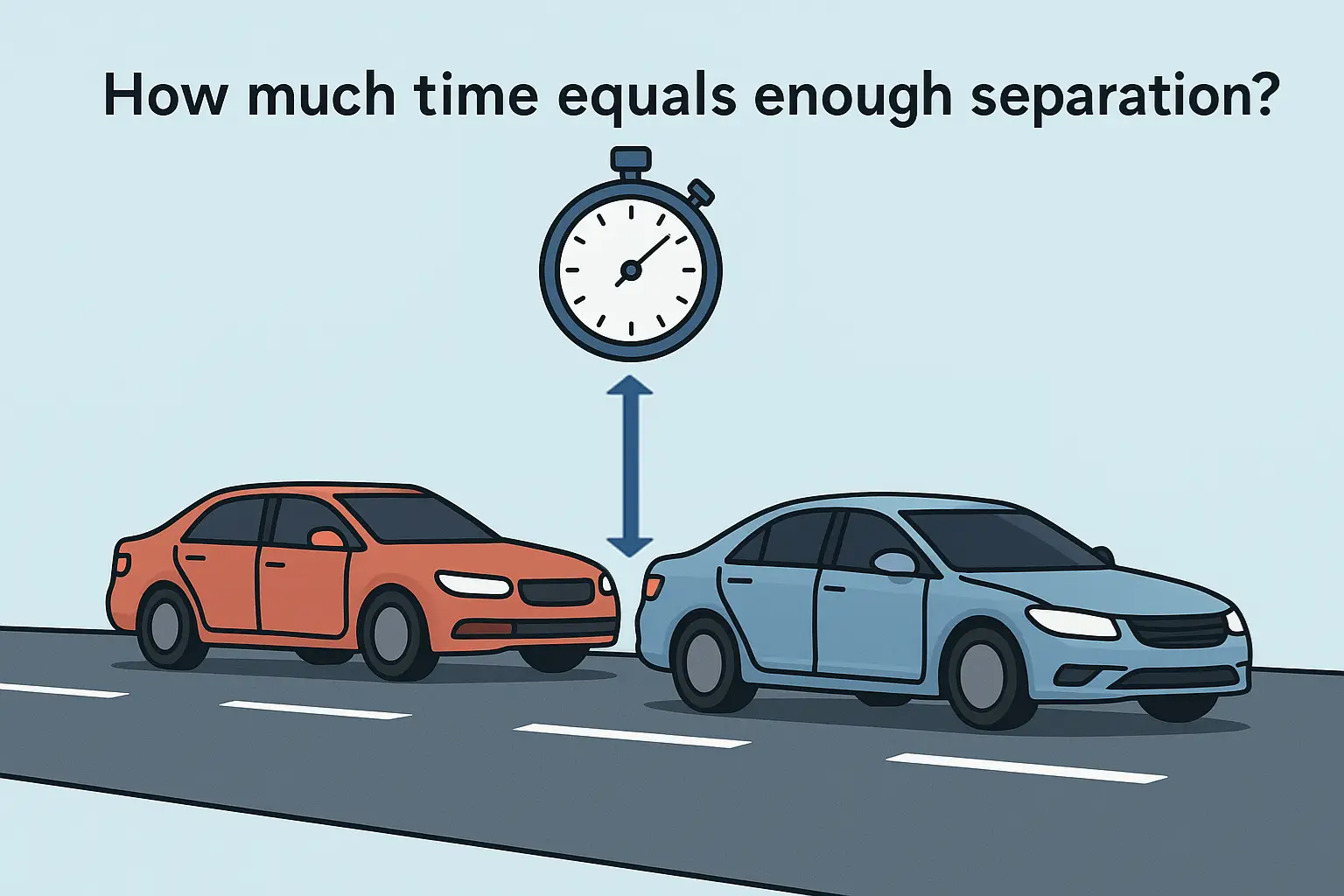
Rethinking the Three-Second Traffic Rule: When Physics Says It’s Not Enough

While researching why car insurance rates are so extremely high in Las Vegas, I started thinking about the three-second rule and its validity. As I’ve always heard, the three-second rule refers to how far you should be behind a car in traffic. The idea is that you pick out a fixed roadside marker and you are supposed to pass that marker at least three seconds after the car in front of you. That rule is simple enough, yet deceptively deep once you unpack the physics.


“Three seconds is a rule of thumb. Physics reveals the truth.”


Read more →

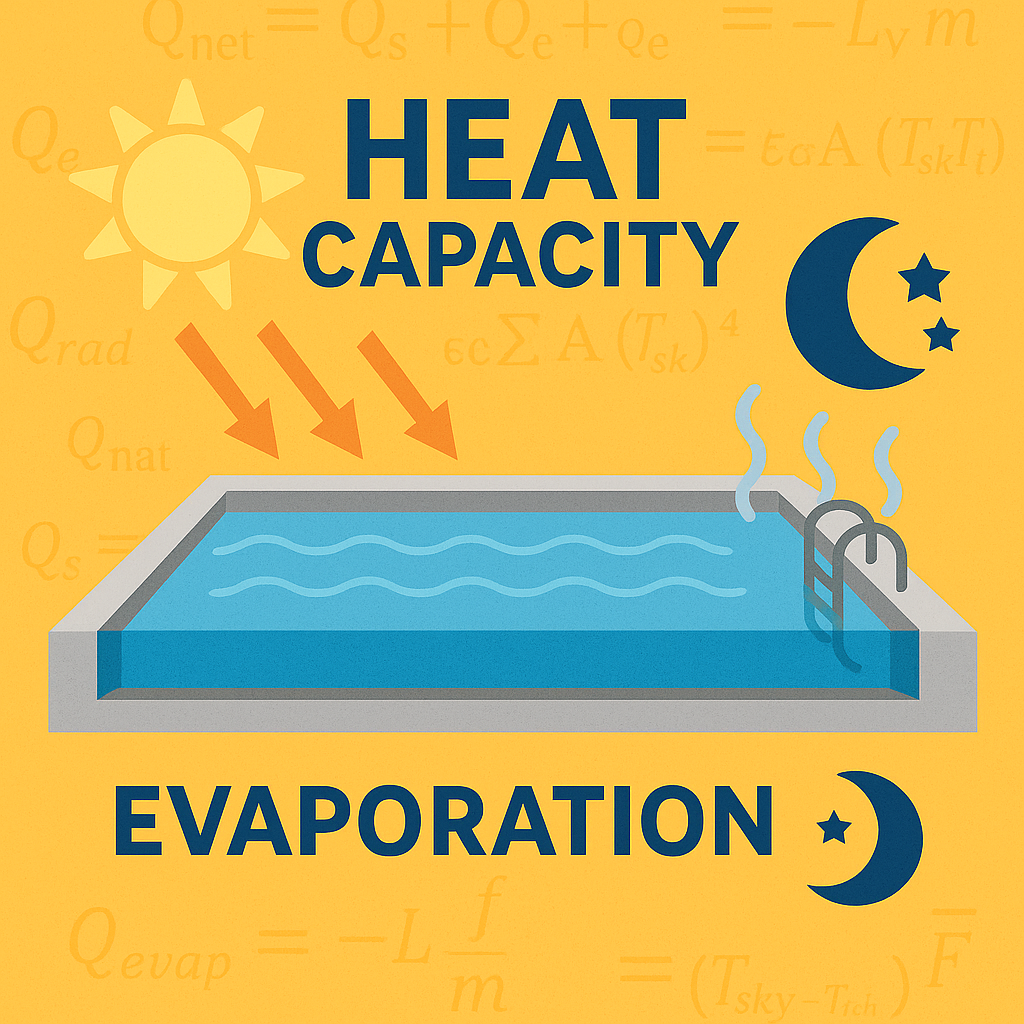
Modeling Heat Capacity and Evaporation with Python: Why Water Warms Slowly but Cools Fast

Every summer, it feels like a small miracle when the pool finally warms up enough to swim. In Nevada, where the air temperature can sit above 100°F (38°C) for weeks, you’d expect the water to keep pace. Yet, somehow, it takes forever to warm, and only a few cool nights can undo all that progress.

The same phenomenon shows up in a stick of butter. Butter melts quickly, while margarine stays stubbornly firm even under the same heat. That’s not coincidence; it’s thermodynamics.

The butter versus margarine comparison is a staple example in nutrition science. It shows how the proportions of fat, water, and solids affect how much energy it takes to change temperature. Butter, with more fat and less water, heats up and melts quickly. Margarine, full of water and unsaturated oils, absorbs more energy before softening because water’s specific heat is much higher.


“A pool in the desert and a stick of margarine in the kitchen both tell the same story: water resists change.”


Read more →

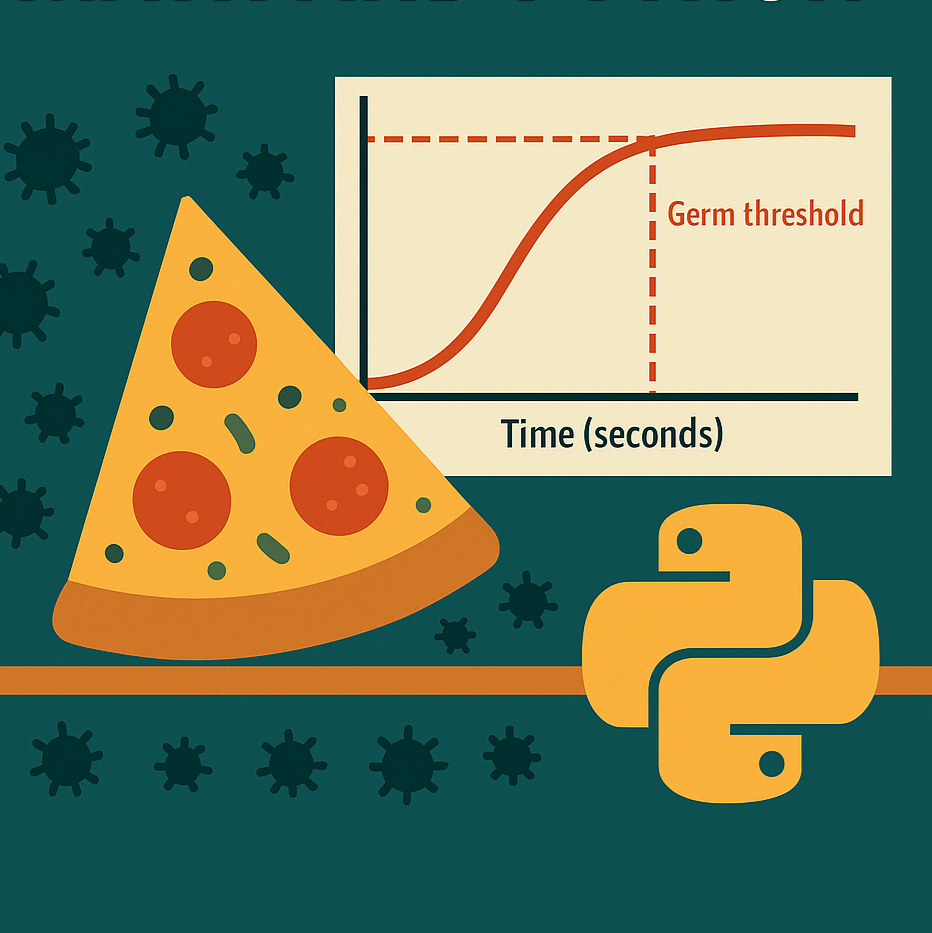
The Five-Second Rule Explored with Math & Python

You know the story: drop a cookie on the kitchen floor, swoop in before five seconds are up, and declare it safe. It is comforting. It is also wrong.


“Germs don’t wait five seconds. They start the party the instant your food hits the floor.”


The truth is much more interesting than the myth. Germs do transfer gradually, but they are especially fast at the beginning. That means if you want to know whether your floor-cookie is still edible, you need to think in curves, not in timers. And curves are something we can model.

Read more →

The Meeting Diet: An Optimization Approach to Your Calendar

Every week your calendar fills with more meeting invites than you can reasonably handle. Which ones are worth the time and energy, and which should you politely decline? What if there was a way to quantify that choice?


“Your calendar is a knapsack. Every meeting takes space, but only some add enough value to justify carrying them.”


The good news: math can help. By modeling your schedule as a 0/1 knapsack problem with two constraints , you can treat meetings like items with value, time cost, and energy cost. Classic optimization techniques then help decide which meetings to attend. In this post, we’ll walk through framing the problem, prompting AI to scaffold the code, and running a simulation to visualize your optimal “meeting diet.”

Read more →

From Ice Shows to Algorithms: Cracking the Truck-Packing Problem

My first full-time programming job was for Holiday on Ice, an international ice show. While I focused mainly on back office systems such as accounting, itinerary, and box office reporting, I knew that one of the biggest technical challenges faced by the show’s crew was efficiently loading trucks for the next city.

“Given the dimensions of a truck and a list of containers (with their dimensions and weight), in what order, position, and orientation should you pack the truck?”


One day, the controller asked me if I could code a system that took, as input, the trucks’ 3D dimensions and the 3D dimensions (and weight) of every object to be packed. Back in the Turbo Pascal era, exploring 3D packing was painful. Today, with Python and AI-assisted scaffolding, it’s surprisingly approachable.

Read more →

Should You Walk or Run in the Rain? The Puzzle That Sparked a Passion

To walk or to run. That is the question. Early in my programming career, I came across a coding challenge that stuck with me for many years: “If it’s raining, will you stay drier by walking or running through it?” At the time, I didn’t have the skillset or tools to simulate the problem properly. It became one of the first exercises that nudged me toward a lifelong fascination with modeling the real world through code.

Read more →