5 "AI and the Mathematics of Language" Posts

How Large Language Models (LLMs) Tokenize Text: Why Words Aren't What You Think

When you type “I love programming” into ChatGPT, you might assume the model reads three words. It doesn’t. It reads somewhere between three and seven tokens, depending on how the text is split.

When you ask Claude to count the letters in the word “strawberry,” it often gets it wrong. The reason is simple. Claude never saw the word “strawberry” as a complete unit. It saw tokens like "str", "aw", "berry" and tried to reason about letters it couldn’t directly access.

And when early GPT-3 users discovered that typing “SolidGoldMagikarp” caused the model to behave erratically - generating nonsense, refusing requests, or producing bizarre outputs - the culprit wasn’t the model’s training. It was a glitch token: a tokenization artifact that never appeared in training data, leaving the model with no learned representation for how to handle it ( Rumbelow & Watkins, 2023 ).


“To a language model, text isn’t a stream of words. It’s a sequence of tokens. The way those tokens are created determines what the model can and cannot understand.”


Read more →

How Large Language Models (LLMs) Handle Context Windows: The Memory That Isn't Memory

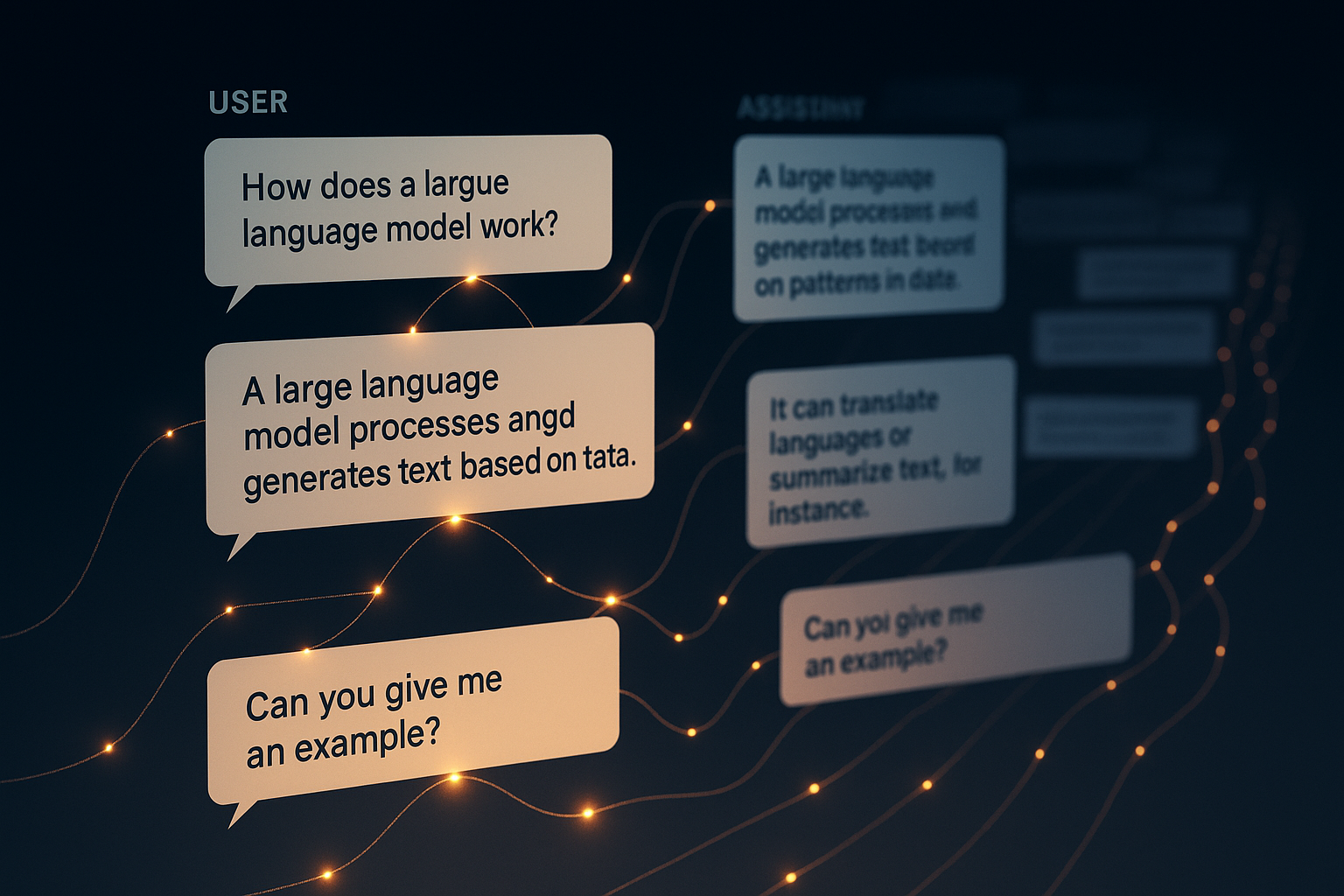
When you have a long conversation with a large language model (LLM) such as ChatGPT or Claude , it feels like the model remembers everything you’ve discussed. It references earlier points, maintains consistent context, and seems to “know” what you talked about pages ago.

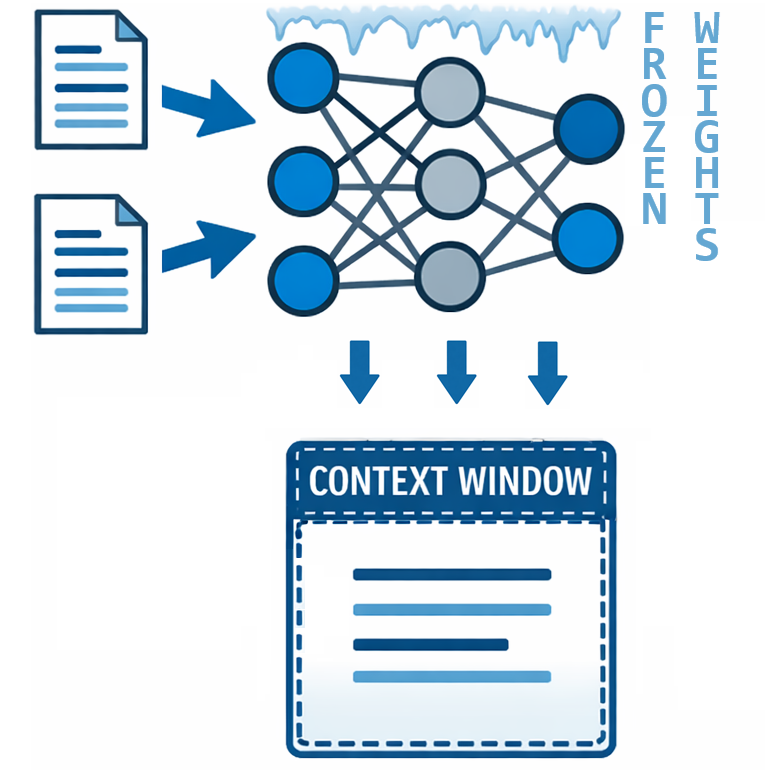
But here’s the uncomfortable truth: the model doesn’t remember anything. It’s not storing your conversation in memory the way a database would. Instead, it’s rereading the entire conversation from the beginning every single time you send a message.


“A context window isn’t memory. It’s a performance where the model rereads its lines before every response.”


Read more →

How Large Language Models (LLMs) Learn: Calculus and the Search for Understanding

When you interact with a large language model (LLM) such as ChatGPT or Claude , the model seems to respond instantly relative to the question’s degree of difficulty. What’s easy to forget is that every word it predicts comes from a long history of learning where billions of gradient steps have slowly sculpted its understanding of language.

Large language models don’t memorize text. They optimize it. Behind that optimization lies calculus. I’m not referring to the calculus you did with pencil and paper. I’m talking about a sprawling, automated version that computes millions of derivatives per second.

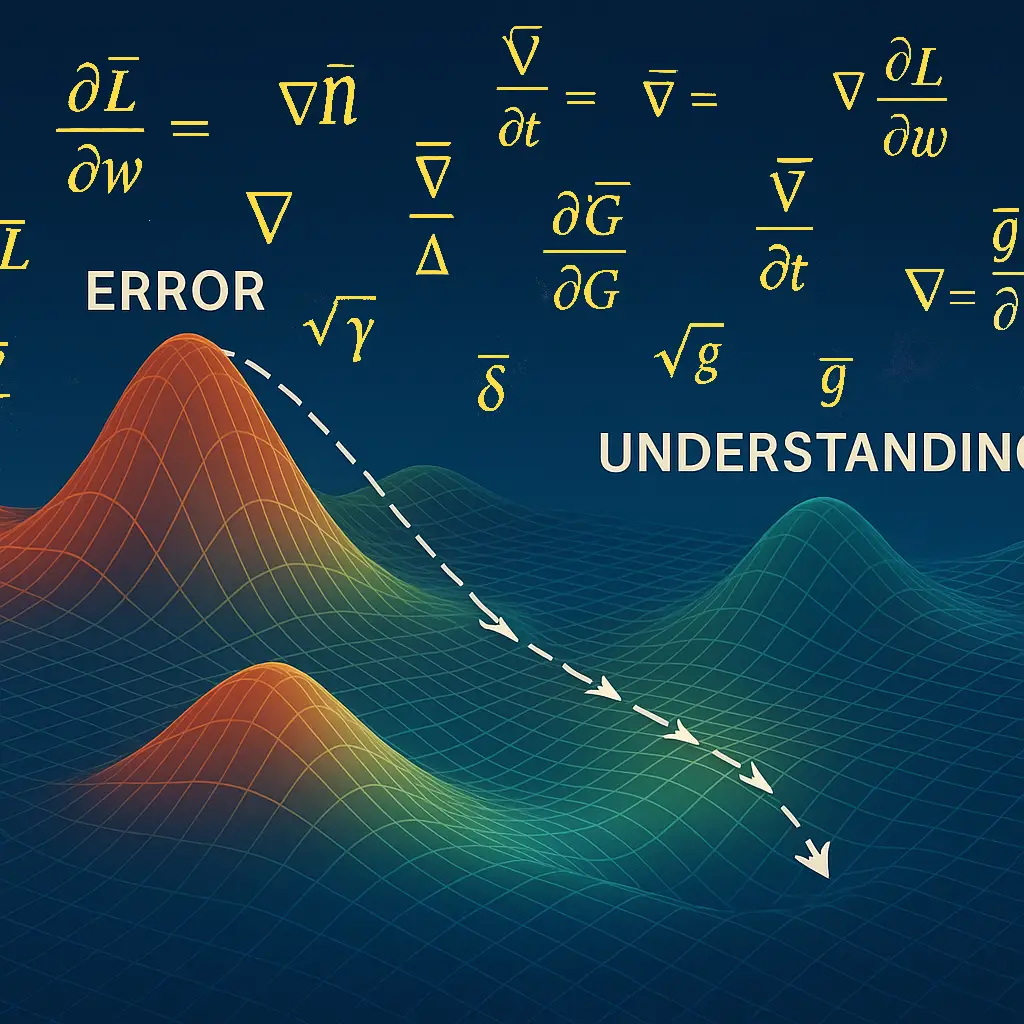
At its heart, every LLM is a feedback system. It starts with random guesses, measures how wrong it was, and then adjusts itself to be slightly less wrong. The word “slightly” in this context is the essence of calculus.


“Each gradient step represents a measurable reduction in error, guiding the model toward a more stable understanding of language.”


Read more →

How Large Language Models (LLMs) Think: Turning Meaning into Math

When you enter a sentence into a Large Language Model (LLM) such as ChatGPT or Claude , the model does not process words as language. It represents them as numbers.

Each word, phrase, and code token becomes a vector — a list of real-valued coordinates within a high-dimensional space. Relationships between meanings are captured not by grammar or logic but by geometry. The closer two vectors lie, the more similar their semantic roles appear to the model.

This is the mathematical foundation of large language models: linear algebra. Matrix multiplication, vector projection, cosine similarity, and normalization define how the model navigates this vast space of meaning. What feels like understanding is actually the alignment of high-dimensional vectors governed by probability and geometry.


“Linear algebra and geometry do more than support AI; they create its language of meaning.”


Read more →

How Large Language Models (LLMs) Read Code: Seeing Patterns Instead of Logic

Developers are accustomed to thinking about code in terms of syntax and semantics, the how and the why. Syntax defines what is legal; semantics defines what it means. A compiler enforces syntax with ruthless precision and interprets semantics through symbol tables and execution logic. But a Large Language Model (LLM), reads code the way a seasoned engineer reads poetry, recognizing rhythm, pattern, and context more than explicit rules.


“When an AI system ‘understands’ code, it is not executing logic; it is modeling probability.


Read more →